Planning a pregnancy in the UAE around heat and travel
Heat, summer travel and clinic access derail gut protocols in the UAE. Here is how to sequence drainage, motility and minerals without losing months.
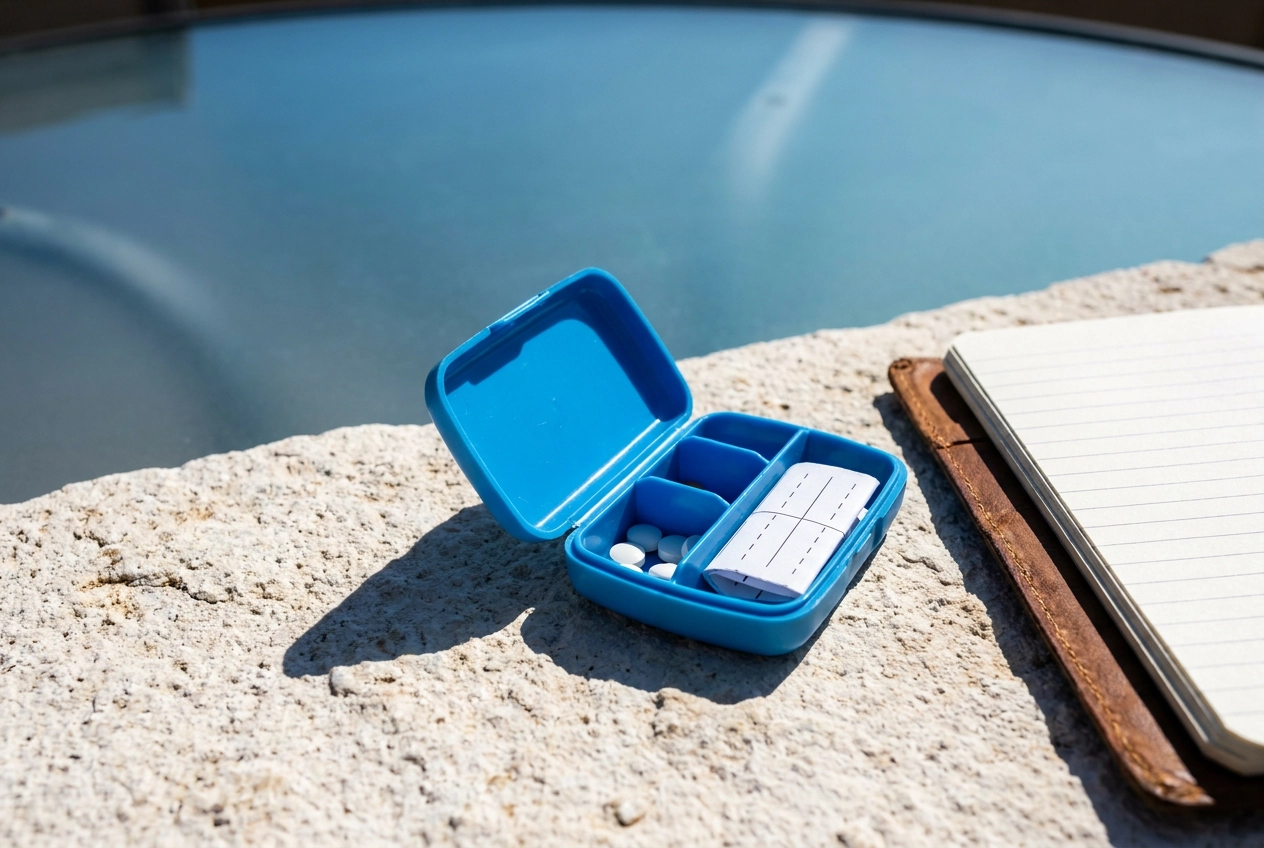
It's 6 a.m. in July and you open your protocol spreadsheet, then remember you fly Thursday and won't be back for five weeks. The supplements are packed. The intention is there. The calendar is not.
The constraint is rarely your discipline. It's the calendar. Summer travel, fasting periods, and fragmented clinic access disrupt the logistics that most protocols silently depend on: timed blood draws, temperature-sensitive shipments, consistent supplement timing across time zones. When a protocol assumes a stable home base and you don't have one for eight weeks, you lose months.
The calendar-first approach below organises the work into three blocks: drainage and nervous system while you travel, motility and minerals when you're home, and treatment and reintroduction only when the calendar is stable.
Why the UAE calendar, not motivation, derails most gut protocols
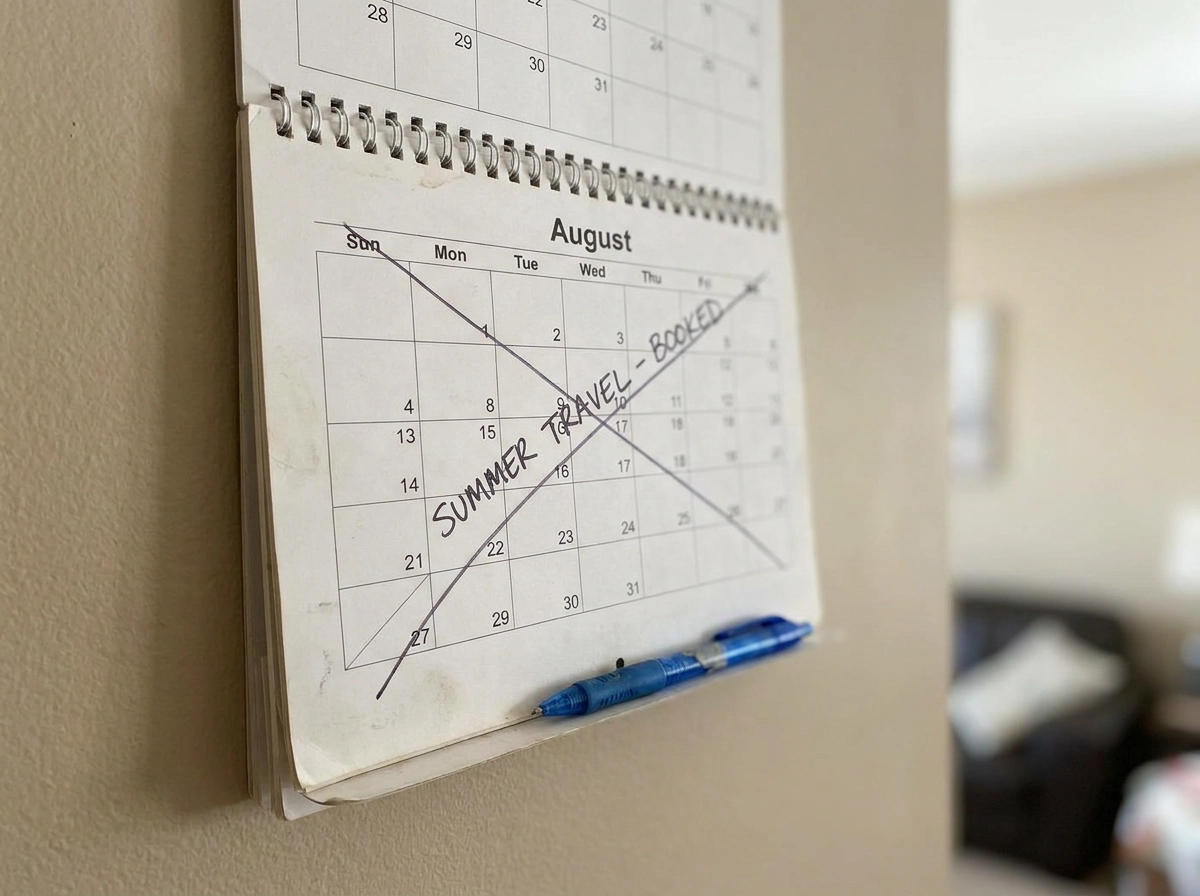
The bottleneck is rarely willingness. It is a collection week that only works at home, your longest unbroken home stretch, and an August exit booked in March.
Three interruptions you can plan around: summer travel, typically June through September for many UAE residents, heat that rewrites walks, meals, sleep and hydration, and fasting periods such as Ramadan that move supplement and meal timing. Access is the third: labs split across emirates, referrals stall between providers, clinics run collections on set days.
An interrupted phase costs more than a delayed one. Drainage, motility and mineral work stack, so in my experience, stopping mid-block means rebuilding the baseline before the next step can begin. That is where months disappear.
The sequence therefore runs on one principle: some phases travel with you, some need a home kitchen, and treatment and reintroduction need a stable calendar window. This is our clinical reasoning about healing before pregnancy, not a validated protocol; the preconception literature is candid that implementation remains difficult.
What has to be settled before you book anything
Before a single collection is booked, settle five things. First, run a two-week baseline: daily bowel pattern, bloating pattern, sleep timing and cycle. A phase needs a measured starting point, not a feeling. Second, coordinate providers. The DoH Abu Dhabi ART clinical practice guideline, published December 2023, sets pre-ART considerations for DoH-licensed professionals, so anything running alongside fertility treatment gets checked with your treating clinician. Third, confirm the labs in play: GI-MAP, OAT, DUTCH and HTMA, each scheduled against a home window, never a travel month. Fourth, prescribed medication and prescribed supplements stay exactly as prescribed; timing questions go to the prescriber, and no protocol here overrides that. Fifth, choose the plan's shape: a specific conception window, or terrain readiness whenever it lands. That choice sets how tightly you compress phases and how much buffer you keep. For context, pooled global estimates put lifetime infertility prevalence near 17.5% and 12-month prevalence near 12.6%, varying by population and method, which is exactly why preconception advice stays so generic. If your standard tests came back normal, this Dubai pre-conception gut health guide covers what to test and sequence.
Block one: drainage and nervous system travel with you
Drainage is a mechanism, not a product. Bile moving, bowels emptying, lymph circulating, so anything you mobilize has an exit route before the next phase stirs the pot. A stagnant route is why a new supplement makes you feel worse, not better. It is also why the phase order inside terrain restoration matters more than the supplement itself.
Nervous system work is the most portable phase you own. Vagal tone, breath pacing, light and sleep timing, HRV: none of it needs a clinic, a kitchen or a fridge, which makes summer travel its natural home.
DUTCH can show cortisol and estrogen metabolism patterns across the day, useful context for a disrupted month. GI-MAP describes the gut environment you are supporting while away and tells you which support matters in a disrupted month.
Build the travel kit on logistics: heat-tolerant supplements, no cold chain, doses split across two bags, and a written schedule that survives a time change. Send it as a table, not a paragraph.
Block two: motility and minerals need a home base
Drainage and nervous system travel well. Motility and minerals do not. Motility is a rhythm, not a supplement: meal spacing, the migrating motor complex, walking after meals and a consistent wake time do more for bowel frequency than anything you can pack. Heat changes mineral losses through sweat, so sodium, potassium and magnesium needs shift before symptoms do. HTMA looks at tissue mineral levels over time rather than a single serum draw. In my clinical practice, low tissue magnesium and sodium can present as cramping, poor sleep and sluggish bowels before serum values move, which is why this block runs on tissue mineral ratios, not a single number. Plan your longest unbroken home stretch, with normal meals and a stable sleep-wake time, for this block. Travel weeks get maintenance, not the full protocol. OAT looks at organic acid patterns including oxalate and fungal markers, showing whether mineral and fluid shifts add to the load in the hottest months. See what gut health tools can and can't do before pregnancy for why order beats intensity.
Block three: treatment and reintroduction only when the calendar is stable
Once motility and minerals are anchored at home, the last two blocks wait for a stable calendar. The order is the point: drainage, stomach acid and bile, motility, minerals, nervous system and gut lining before any treatment. A treatment block is never first, and never scheduled around a flight.
Treatment needs consecutive weeks at home with predictable meals, sleep and bowel patterns. Start nine days before an airport run and you spend the phase and the money without reading the response. Reintroduction cannot be compressed: stable baseline, one variable at a time, quiet weeks to read your reaction rather than guess whether it was food or travel. How to choose a restore-first gut program covers the criteria.
Ramadan, Eid travel and school holidays are known quantities. Mark them before assigning any phase, because fasting weeks shift supplement timing, hydration and meals; any change touching prescribed medication goes through the prescriber.
If the timeline is tight, fewer better-timed phases beat a compressed protocol through a move, flight and heat wave. Two clean phases beat four broken ones. Anything alongside fertility treatment, testing and supplementation included, gets cleared with the treating clinician within the ART guideline's scope for licensed professionals.
Sample logistics: batching collections around clinic access and travel
With the treatment window protected, the collections need the same discipline. Each kit has rules that do not bend: GI-MAP stool handling, DUTCH urine across a day or a cycle, OAT first-morning urine, and HTMA hair reflecting a longer window. Read the timing requirement before you choose the week, and review what the GI-MAP actually measures so handling decisions are not guesswork.
Do not ship a sample the week you fly. Collection weeks belong at home, with normal meals, normal sleep and a normal bowel pattern; otherwise the data describes your holiday. When access is split across emirates, batch one trip for the blood draw, scan and consult, and build appointments around the collection, not the reverse. Keep a duplicate kit for your most-run tests so a spoiled sample costs a week, not a month. Schedule retesting against a home window too, so the second data point reflects the protocol rather than a heat wave, a hotel breakfast and a time zone shift.
Why your normal results were not the whole picture
Batching collections solves the logistics. It does not solve interpretation. A standard panel answers two questions: is there disease, and does this value sit inside the reference range. Neither tells you how your terrain functions day to day. Reference ranges are built from population averages, so a value can be inside the range and still far from your own baseline. That gap is the pattern behind normal results and ongoing symptoms. The four labs add what a standard panel skips: commensal balance on GI-MAP, estrogen and cortisol metabolism on DUTCH, mineral ratios and heavy metal screening on HTMA, organic acid patterns on OAT. These tests map patterns and set phase order. They are not diagnostic tools and do not replace your clinician's assessment. The output is a Root Cause Map: four data sets turned into an order of operations, not a longer list. Sequencing is the deliverable, and it is why SIBO, H. pylori, and Candida are symptoms, not root causes keeps showing up.
Building the sequence: a calendar-first walkthrough
You have the order. Now make it survive the calendar.
Step one: mark the immovable blocks first. Shade summer travel, Ramadan and any fasting period, weddings, work trips, and the weeks your clinic is genuinely open for collection and review. These are fixed points, not flex.

Step two: drop portable phases into travel and heat months. As Block one establishes, drainage and nervous system work need no kitchen, no fridge and no clinic.
Step three: assign motility and minerals to your longest home stretch. As Block two covers, this is the block most people try to run on holiday and most often lose.
Step four: protect one stable window for treatment and a second, separate one for reintroduction. Back-to-back protected windows are what make a six-month protocol actually finish in six months. This is the DRESS framework meeting a real calendar.
Step five: build one buffer week per quarter. Plans that assume nothing goes wrong are the plans that restart, and the buffer is cheaper than the rebuild.
Keep the whole map on one page: month down the side, phase across the top, travel and fasting blocks shaded. If it needs two pages, the protocol is too ambitious for the calendar.
Keeping the routine intact through heat, fasting and travel days
With the map drawn, the week-to-week job is protecting it. Five rules keep a phase from quietly dying.
Heat: in extreme heat, walk before sunrise or after sunset. Sip fluids and electrolytes steadily through the day rather than catching up at night. Keep meals cool and simple when appetite drops rather than skipping them.
Travel: anchor meal timing to your home clock where the schedule allows. Run the portable phase at full dose; hold the home-anchored phase at maintenance until you are back.
Fasting weeks, Ramadan included: plan hydration, meal composition and supplement timing before day one. Treat them as maintenance, not a phase launch. Any timing change touching prescribed medication goes through the prescriber.
Nervous system: one fixed five-minute anchor daily, not a longer practice you skip.
Sleep: protect a consistent wake time. A consistent wake time anchors motility, the cortisol rhythm and appetite, often more reliably than adding another supplement.
When to pause cleanly instead of pushing through
The routine holds. The question is when to stop on purpose.
Pause when the next four weeks contain a flight, a move, a heat wave or a fasting period. A clean pause keeps what you built. A broken phase spends it.
In my experience, drainage and nervous system work holds well over a two-week pause. That is why pausing after a portable phase costs far less than stalling mid-treatment or mid-reintroduction.
Set the pause date and the restart date in the same conversation, calendar open. The restart becomes a scheduled event, not a good intention.
If two phases in a row get interrupted, read that as information about the schedule, not your discipline. The plan is wrong, not the person.
Keep the retest on the home side of the pause. Both data points stay comparable, and the next phase gets chosen from real numbers.
What to do with this before your next flight
Once the pause and restart dates are set, shade travel, fasting weeks and clinic-open weeks on one page. Place phases into those gaps rather than fitting travel around them.
Coordinate testing and supplementation with your fertility or obstetric provider, especially near ART.
At Satori this runs inside The Gut Revival Method, six months on the Restore & Rebalance Method, with GI-MAP, OAT, DUTCH, HTMA and a Root Cause Map. Start with the free Root Cause Assessment at myrootcause.satorihealth.co, or book a Root Cause Audit call and we will map your next two quarters, travel and heat included.
Conclusion
The UAE calendar, not your discipline, decides which phase fits where. When two phases break in a row, read that as a scheduling problem and move the phase, not the person.
Set your pause and restart dates in one conversation, before you book the flight, and keep the retest on the home side so both data points stay comparable.